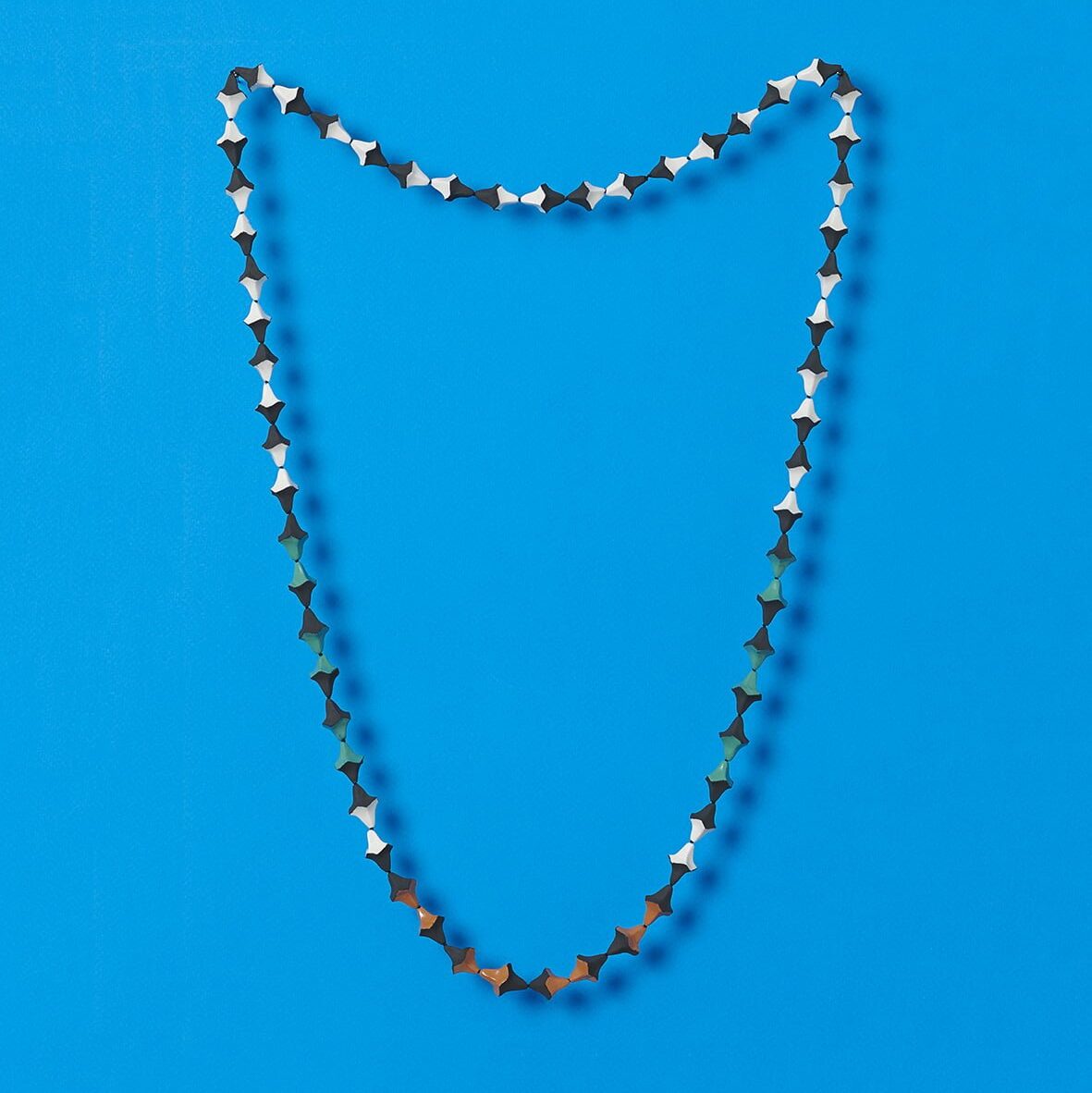
Manon van Kouswijk ‘Making With Found Hands’ | Otto Künzli ‘Cozticteocuitlatl 1995-1998 B.M. (reprised)’
Manon van Kouswijk | Making with Found Hands
At the start of 2025 I spend 3 months in France at POP Atelier Bijou / ENSAD in Limoges as an artist-in residence to work with ceramics in their wonderful workshops.
Being and working somewhere else for such a good amount of time is a rare and fantastic opportunity.
Cuisson is the French word for cooking and this is also what they call the firing of ceramics, so I have been cooking instead of firing porcelain clay for 3 months.
Door knockers on the doors of some of the older houses in Limoges often have the shape of elegant female hands. There are right hands and left hands and most of them are wearing rings. Originally based on the hand of Fatima they are a symbol that offers protection from evil, similar to a good luck charm.
Every day I tried to take a different walking route through Limoges to find my bearings in this new place.
Finding and photographing the door knockers became part of these walks.
Guided by hands, carried by feet.
Hands on doors and hands in clay.
In the meantime in the studio I had started making porcelain rings. These had no connection to the found hands, it was just an interesting concurrence; I was searching for hands while making rings.
If anything the ring shapes were to some degree influenced by the detailed ornaments of the architecture that I absorbed on my walks through the city. Porcelain elements frame rings like architraves adorn windows. Forms sit on fingers like capitals on columns.
J is for jaywalking and jumping and other erratic movements.
Kaolin is one of the main ingredients of porcelain and was discovered in the 18th century near Limoges. This discovery paved the way for the porcelain manufacture that the city is known for.
Les Deux Plateaus by Daniel Buren in Paris is one of my favourite public art works that I revisited during my time in Europe. It is situated in the inner courtyard of the Royal Palace and despite its strict arrangement it is also a playful work that gets used by children to climb on and jump from. This combination of precision and play really appeals to me.
Musée Rodin in Paris holds a beautiful collection of hands and models of hands in plaster and stone by the French sculptor. His drawings of hands are also impressive as hands are notoriously difficult to draw.
Nothing is what clay can feel like because of its shapelessness, it gives you only what you make of it. This nothingness can be a great starting point for making something.
Originally the porcelain manufacturers of Limoges were producing white wares for the French court, they were not allowed to decorate them. The decorations were applied to the white wares at the royal porcelain factory of Sèvres, just outside of Paris.
Porcelain’s whiteness for me is a perfect material to mimick pearls. In some of my new necklaces pearls are seemingly projected onto a background formed by a second necklace; the principle of figure and ground applied to a threedimensional object.
Quartz is another essential ingredient of porcelain clay that was found near Limoges alongside kaolin.
Remembering is a characteristic of porcelain; it’s a material that is said to have a memory. This memory can cause the clay to revert back to its original shape or form during drying and firing (or should I say cooking..) leading to warping or cracking.
Slowness is another typical trait of ceramics: some days I really don’t have the patience to work with clay.
Templates for drawing jewellery shapes were one of the things I took with me to France. I ended up using them to press imprints into porcelain.
Using the drawing templates in this way enables me to turn their graduating archetypal shapes into sequences of beads that move across background beads like an animation. This process highlights that the beaded necklace is in itself a kind of template. I explore aspects of drawing by using the templates in different ways to make impressions, marks and shapes. As objects the necklaces are only just threedimensional, their relative flatness connects them to drawings and photographic images.
Visualising the outcome of the work is probably impossible to avoid doing but with ceramic work it can be very unhelpful as the result is always so different from what you imagine it to be.
Walking can be a way of thinking, movement sets thoughts in motion. When I get stuck in the studio, I often go for a walk.
X-rays are a valuable tool for examining porcelain objects, both for artistic and scientific purposes. They can reveal internal structures, identify materials, and help in the dating and analysis of porcelain artefacts.
Yesterday I opened the kiln and everything was cooked to perfection.
Zabaione Zebra Zero: today it starts all over again.
The works in this exhibition have been developed during an artist in residence
at POP Atelier Bijou / ENSAD Limoges, France in 2025.